| This text is in a coloured box to separate it from the rest of the chapter. It is a comment about this working draft chapter, which started as a more or less conventional historical review of the early developments of chemistry in the West. The first parts of the Wikipedia page, History of Chemistry, were used as a template for this early draft. This update interweaves its content with Rudolf Steiner’s Riddles of Philosophy. Also to be used is E.J. Dijksterhuis, The Mechanization of the World Picture. |
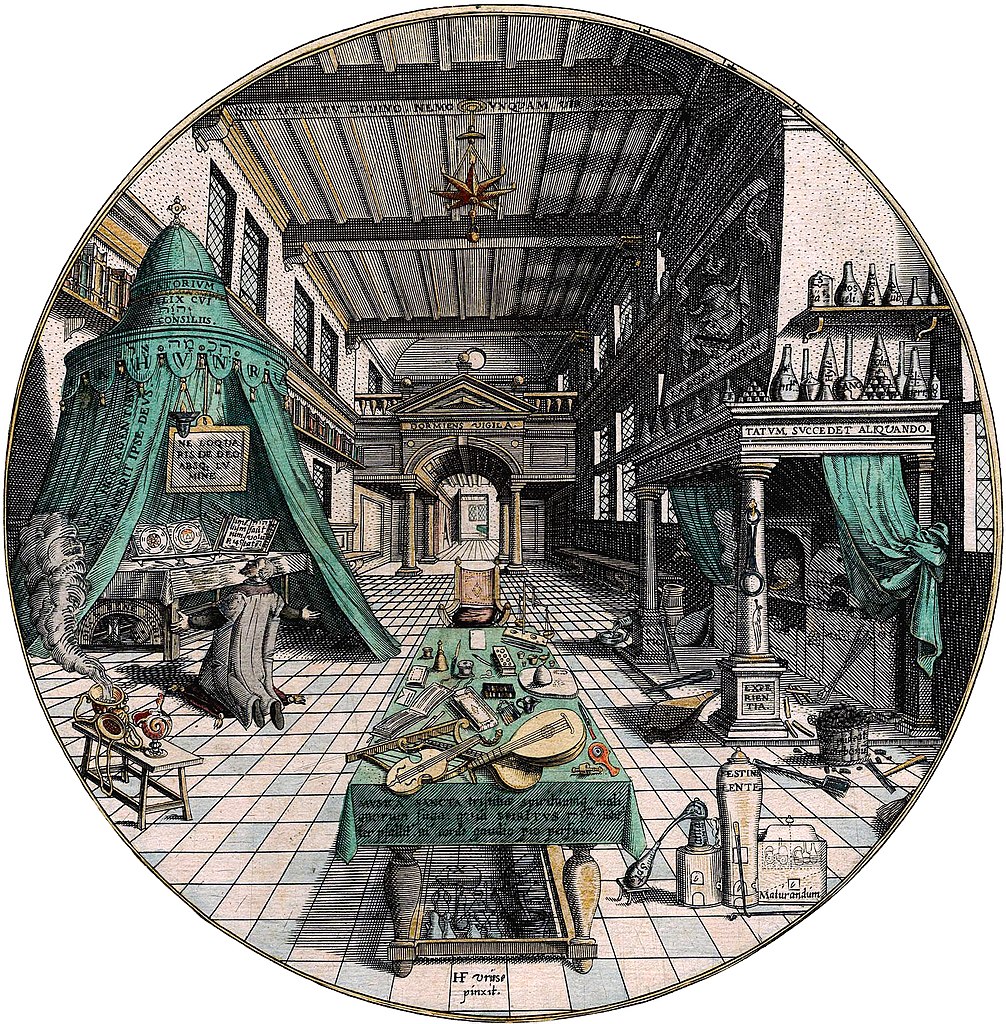
The mysteries to be explored in this book largely fall under the subject matter of chemistry. Though I was not particularly talented at school or university in the practical art of chemistry, I have always been fascinated by its apparent magical qualities. There is something deeply mysterious about it. I remember as a child seeing a painting of an alchemist’s laboratory and wishing that I might possess such a wondrous room.
Nevertheless, the history of chemistry is effectively the story of the progressive loss of its magic, which was systematically replaced by clear mathematical thinking. I recall reading (somewhere!) that Rudolf Steiner said this was a very necessary historical development. Part of my homework for this chapter is to find, read and understand just exactly what Steiner did say…
Early Humanity
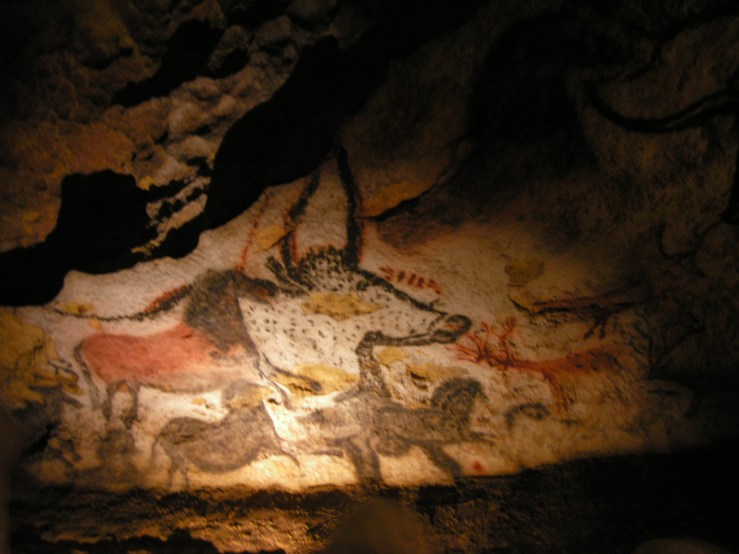
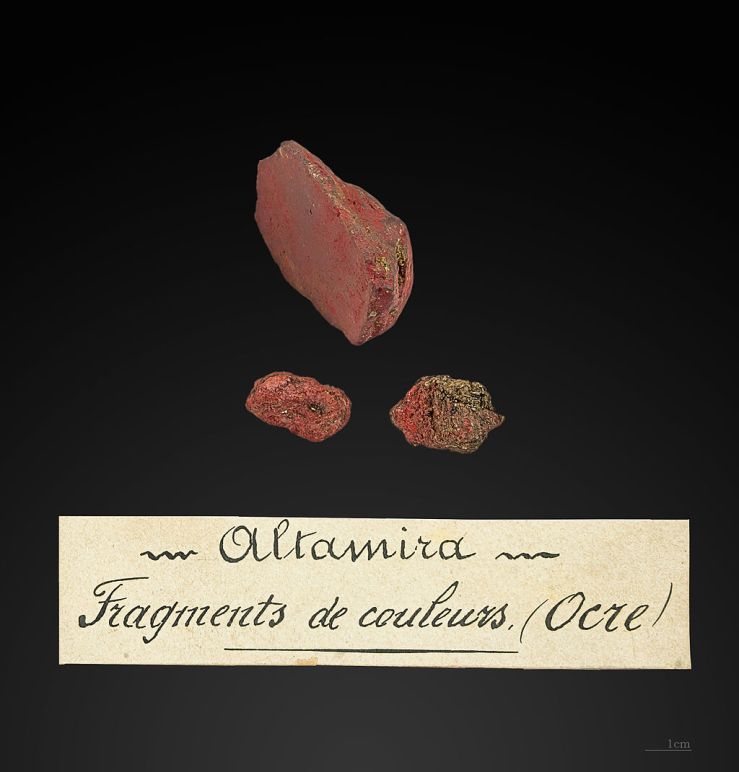
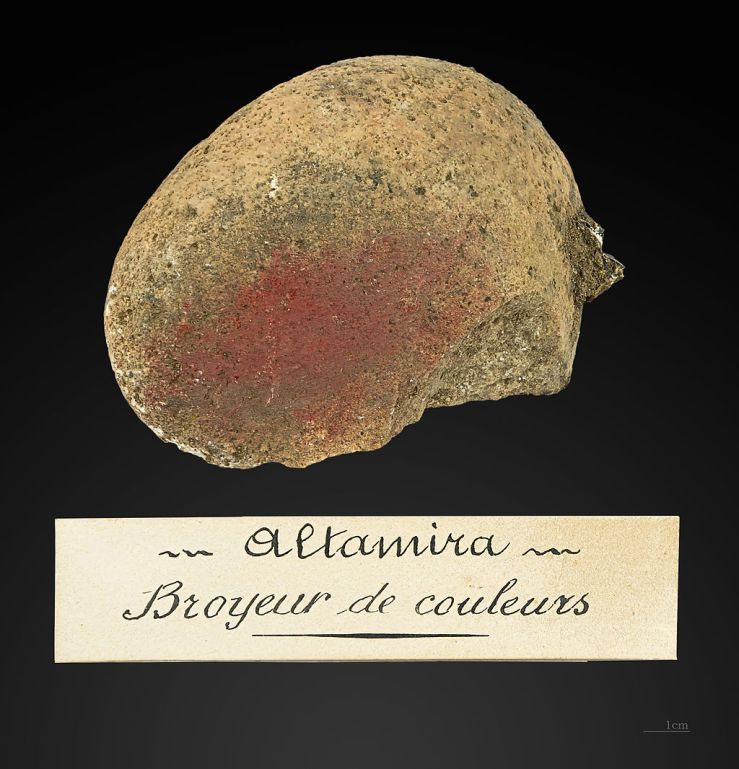
The earliest known working with chemical substances involved the grinding and mixing into a paste of the naturally occurring red and yellow ochres to produce paint. The ground mineral taken from the earth was mixed with a liquid to make a paste which could be applied to their bodies, skins, and – in a form which still survives today – the many prehistoric paintings which adorn certain caves on every inhabited continent on Earth. This is something today which we more or less take for granted; that paint can enable living organisms to be re-created – to appear to regain their soul life – something that is a truly mystical process.
Fire
Fire was another of our prehistoric legacies. Bushfires can be naturally started by lightning. Great energetic rips in the fabric of our reality; enabling the appearance of red tongues of tremendous heat and light which feast on organic matter, transforming it into smoke, charcoal and ashes. This fire could be collected, nurtured, and maintained as a sacred entity. Later, through the striking of certain rocks – flint against nodules of marcasite (iron ore) or meteoric iron – sparks could be formed – like miniature orange stars. These sparks, when carefully captured and nurtured using fine dry kindling and with the action of the breath or wind, can generate a red hot glowing ember. At first the glowing ember merely increases in intensity, then as the kindling heats up it will emit increasing amounts of acrid smoke. And then – with a sudden burst of heat, light and sound – the mass of kindling erupts into ever hungry burning flames.
The transformative powers of fire are truly magical. From wood comes heat and light. Water can become gas (or vapour). Food when roasted will change its colour, texture and taste. Earth – in the form of stone or soil – can change colour. Clay can be baked hard as stone. Some rocks can even be transformed into liquid, which – on cooling – form new glassy, or even metallic substances. Stones can also hold heat, and when dropped into water holding containers, can cause the water to boil without the vessel being damaged by the fire. Knowledge of the transformative powers of fire would have been highly prized. In the wrong hands it is deadly. In the right hands it can nurture life. It might be considered as a portal between realms.
Early Metallurgy
The earliest metals to be valued by humanity – collected and shaped for ornament, symbolism or utility – were those which occur naturally in their native form. Gold is the earliest known and most obvious example. Its colour, lustre, weight and malleability are truly remarkable.
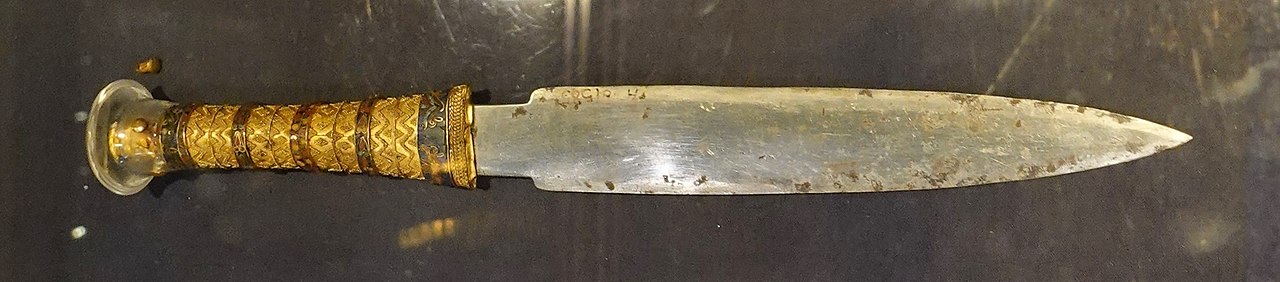
Iron from the sky was certainly known in at least Ancient Egyptian times. It would have been a rare and memorable event indeed to have witnessed a flaming meteorite fall from the sky. Though much less malleable than gold, such iron rich meteorites would have been exceedingly precious gifts from the heavens indeed. In English, in winter, when the earth is frozen solid, it is said to be as hard as iron. A blade hammered out from such a stone would reflect the light in a similar manner to gold, but unlike gold it could cut and keep its edge – far superior to the stone blades that were the height of technology at that time.
Silver, copper and tin may also be found naturally occurring in their metallic form, as nuggets or in veins, which – due to their malleable nature – can also be hammered into beautiful, precious objects. The secrets of their sacred magick (as opposed to the magic of tricksters and conjurers) which they possessed or enabled, would have been strongly guarded.
Bronze Age
Those metals which may be found in their pure metallic form can also be extracted by heating the rocks in a fire: notably tin, lead and (at a higher temperature) copper. Like the transition from ice to water, with heat they can melt and become liquid. However, such elemental forms are rare, and the heat may cause them to lose their metallic qualities. The addition of a reducing agent such as charcoal solves that issue. This process is known as smelting. It also enables the much more commonly occurring copper ores found in a non-metallic state – such as the mallow-green stone malachite – to be transformed into pure copper metal. When the ore is hammered into small fragments and mixed with charcoal (in the right proportion), these can be smelted in clay vessels or furnaces. High temperatures are needed. This required furnace technology to be developed, to enable extra air to be forced into the charcoal fire using some form of bellows. It seems that each cultural region developed its own unique methods for producing pure molten copper. This indicates that the methods were closely guarded secrets, passed on only to trusted initiates. The molten copper can be either poured into a shaped mould, or into a single ingot to be hammered into shape and worked into beautiful, treasured objects.
In time, it would have been observed that certain impurities which may be present with the copper, such as arsenic or (more rarely) tin, both lowered the melting point of the copper, increased its fluidity (easier to pour into intricate moulds) and increased the hardness of the final object. Through careful observation and experimentation, tin – as a separately mined ore – was purposely added to the copper to produce what we now know as bronze.
Iron Age
Whilst the principles learnt from smelting bronze could be applied to that of the much more commonly available iron ore, the considerably higher melting point of iron made it a significantly more challenging task. The development of new sophisticated technologies were required. The superior properties of iron tools made the extra effort worth while.

 Rethinking the Nature of Substance

Leave a comment