
By the 1840s mainstream scientists appear to have concluded that living organisms obey the same physical and chemical laws as inorganic nature. During the course of the nineteenth century their experiments increasingly supported this belief. However, some noteworthy exceptions existed. Albrecht von Herzeele was one of the most significant for this book.
Little is known about him; I give below a working translation (obtained by Google Translate, with minor corrections from myself) of his German Wikipedia page:
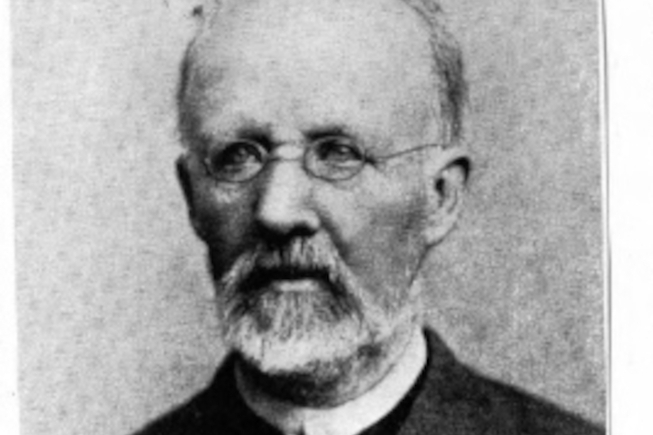
Albrecht von Herzeele
Otto Philipp Albrecht Baron von Herzeele (born June 23, 1821 probably on Gut Vietgest, Rostock district, † unknown) was a German scientist and author of specialist books.
Life
He came from the Von Herzeele family, a family that originally came from Cologne and had moved to Antwerp and was the son of Colonel Cornelius Freiherr von Herzeele († 1830), heir and judge of the estates Vietgest (since 1819), Nienhagen and Reinshagen (all three today part of Lalendorf) and Schwiggerow (today part of Hoppenrade), all in the Rostock district, and his wife Therese von Lindenau.[1] [2]
Herzeele studied medicine from 1841 to 1842 at the University of Geneva and from 1843 to 1846 at the Humboldt University in Berlin.[3] In 1849 he published in Berlin his play Marquis Pombal. He later lived and worked in Hanover.
In 1873 he published The Origin of Inorganic Substances. From him comes the sentence: “It is not the soil that produces the plant, but the plant that creates the soil.”[4]. Herzeele made several hundred experiments from 1875 to 1883, which convinced him of the possibility of biological transmutations.
Between 1876 and 1883 he conducted several hundred analyses of the mineral content of seeds, before and after germination. His published results clearly demonstrated increases in a number of chemical elements after germination. He published four reports on his work:
- Einige Tatsachen aus denen die Entstehung der unorganischen Stoffe abgeleitet werden kann [Some facts from which the origin of the inorganic substances can be derived], 1876
- Die vegetabilische Entstehung des Phors und des Schwefels [The vegetable origin of phosphorus and sulfur], 1880
- Die vegetabilische Entstehung des Kalks und der Magnesia nebst einer volaeufigen Mitteilung ueber die Entstehung des Kalis und des Natrons [The vegetal origin of lime and magnesia along with a comprehensive report on the origin of potash and sodium], 1881
- Weitere Beweise fuer die vegetabilische Entstehung der Magnesia und des Kalis [Further evidence of the vegetable origin of magnesia and potash], 1883.
These were lost for many years, till they were rediscovered in a library in Berlin by Rudolf Hauschka sometime in the 1920s or ’30s. They were republished in Hauschka’s book Substanzlehre.
Sophia Holleman has produced a working translation (with minor corrections from myself) of the first of Herzeele’s publications:
The Ability of Plants to Create Inorganic Substances: Results of Experiments
A. von Herzeele, 1875Nature has neither kernal nor shell
In both as a oneness does she dwell
GoetheTo obtain a thorough insight into the transmutation of one element into another is something held by many to be an undertaking doomed to failure from the start. Although I worked for many years to find the solution of this phenomenon, I cannot say that I came closer to my goal despite the fact that some favorable results were forthcoming.
Still, one feels a certain urgency in attempting to find an answer to the question of the transmutation of elements especially because of the broader attitude of science today. On the one hand it seems natural not to be able to find a solution, but on the other hand a solution if found, can easily be unacceptable in view of its apparent unlawfulness.
As a starting point in the setting up of my experiments with growing plants I would like to step away from the currently accepted views and present the following thoughts. In my opinion there is no such thing as the inorganic. Nature does not create soil first and then the plants, soil and plant come into existence at the same time. Soil consists of elements that are created in plants and the plant will continue to produce these elements. This must be proven by experiment.
If plants are grown in aqueous solutions, or on sand, or pumice etc. the seeds and roots will loose organic and inorganic substance especially in the latter case. For this reason I did the experiments, for the greater part, directly on porcelain plates. The roots form a thick texture which is easily kept moist, especially when they are covered with glass tops, bell jars etc. Distilled water was used. In this manner the previous problem did not occur. According to the usual supposition the seedlings must have the same quantity of inorganic substances as the seeds.
Four times a quantity of four beans, of the family of Vicia faba, weighing on average 2.063 g was analyzed with the average result:
0.050 ash
0.006 sulfate of lime (as oxalic acid precipitated, as sulfuric acid weighed)
0.0106 phosphate of magnesiaThe average result of four seedlings grown on distilled water from four beans of the same kind (weighing in average 2.294 g) was after four experiments:
0.064 ash
0.13 sulfate of lime
0.014 phosphate of magnesia
Three analyses of 6 g quantities of Trifolium pratense had the average result:
0.030 sulfate of lime
0.043 phosphate of magnesiaThe seedlings of a quantity of 6 g seeds each had in four experiments the average:
0.043 sulfate of lime
0.064 phosphate of magnesiaWith the same kind of seeds an analysis was done four times, each with 6 g of seeds, with the result in average:
0.017 sulfate of barite (barium sulphate) equivalent to 0.006 sulfuric acidThe seedlings of a quantity of 6 gr. seeds each had through four experiments the average:
0.034 sulfate of barite (barium sulphate) equivalent to 0.012 sulfuric acid
White beans, average weight 2.930 g average of three analyses:
0.011 sulfate of limeSeedlings of a quantity of 2.940 g beans each, had after three experiments:
0.018 sulfate of limeDwarf beans, average weight 2.500g, average of three analysis:
0.006 sulfate of limeSeedlings of the same seeds with the same weight, average of three experiments:
0.015 sulfate of limeNone of these kind of beans showed an increase of phosphate of magnesia.
Four times a quantity of 6 g of seeds of Brassica oleracea had in four analyses an average of:
0.071 phosphate of magnesiaThe seedlings of 6 g Brassica produced as an average of four experiments:
0.090 phosphate of magnesiaThe increase in lime was insignificant, for sulfates there was none.
The increase of phosphate of magnesia in the seedlings of turnips was:
0.012 in relation to 0.074 for 6 g of seeds.
The increase of sulfate of lime and phosphate of magnesia in the seedlings of barley was respectively:
0.004 and 0.012 (seeds)
0.008 and 0.018 (seedlings).
How difficult it may be to accept something which is contradictory to our accustomed preconceptions, one must admit that the proven increase of inorganic substances in the seedlings have to do with the growing processes of the plant. There is no lime, magnesia and sulfuric acid in the vessels, nor in the distilled water. These substances must have come about just as the so-called organic bases and acids are formed through the densifying and formative effect of light and warmth. The change of the substances in the cotyledons, the growth of the plants and their development into new forms (even if we don’t consider assimilation) is not possible without the simultaneous change and increase of inorganic substances. Lime, magnesia etc. did not come out of its own into existence before the plants did, they grew together. Lime and magnesia cannot come about without a living organism. The fact that a dead substance originates from another dead substance is impossible. What lives dies, but what is dead is not created as such.
Cellulose, chlorophyll etc. are influenced by the earth and the atmosphere, whilst lime, magnesia etc., once they are there, stay unchanged and form the soil. So the soil creates not the plant, but the plant the soil. Nature does not fix first the parts together into a whole. She does not produce first potassium and then phosphoric-acid, as in a laboratory. She has command over the organism of the plants and the animals and those produce the substances in the process of creation and growth. The creation of elements is an everyday process.
Because the soil is a product of the plant, the plant can take up substances out of the soil. Only through such a conception can one explain this aspect of growing processes in plants. If the soil was not the product of the plant, the plants would not grow on it. Experiments to be done later will show which elements are brought about through the organisms of animals, but a sharp dividing line is not to be expected. As to those elements we do not find in living organisms it is possible that the sun did not always shine like today and that in an earlier time plants and animals in their primitive forms, produced – in a much brighter atmosphere with different light and temperature – elements we do not find anymore in living organisms because they cannot be created by the cosmic conditions of today.
It is not my intention to elaborate on further conclusions. With this publication I want to encourage other people to repeat my experiments and this in modified ways: e.g. experiments on a larger scale, with seeds, bulbs and tubers, in darkness, with different colors of light and different temperatures and measured quantities of air. It would also be important to determine whether leaves and roots differ in the production of elements. As nearly nothing is known about the coming into existence of elements this request seems to me to be justified.
I will report later on the behavior of substances like manganese, iron, silica, alumina, potassium, sodium, chlorine, which I did not mention here.
Freienwalde a.d. Oder, November 1875.
A.von Herzeele
Because of the importance of his work, it is my intention to attempt the translation and publication of all four of his biological transmutation reports.
Herzeele’s inspiration was clearly that of Naturphilosophie [nature philosophy], and the ideas of Goethe in particular. It is interesting that although this school of thought has been largely written out of histories of science, the movement was particularly influential nonetheless. [See, for example.]
The philosopher W. H. Preuss was familiar with Herzeele’s work and they both held related ideas. Therefore an introduction to Wilhelm Heinrich Preuss by Renate Riemeck may be of interest [rough translation from Google Translate]:
WILHELM HEINRICH PREUSS, A MIRROR IMAGE DARWIN
Abridged version from the book: “Geist und Stoff”, Verlag Freies Geistesleben, Stuttgart 1980
A life sketch (1843 – 1909)
When Preuss died on February 12, 1909, science paid no attention to his death. It is all the more surprising that Rudolf Steiner attached great importance to the “little-known thinker of Elsfleth” just five years after the death of Preuss. In the views on nature and evolution, Preuss appears as a reflection of Charles Darwin. This becomes very clear when you take note of your thoughts in the following post.
It has already become very complicated to compile Preuss’ publications. It is even more difficult to find the traces of his life.
On Michaelmas 1843, on September 29th, Wilhelm Heinrich Preuß was born in Garlstorf in the Lüneburg Heath. His father was the village schoolmaster there. Preuß owed his upbringing and education to him and the Protestant pastor of Salzhausen, a small town on the Luhe. He must have been an unusually talented young person. Because only when he was eighteen did he receive a job as a tutor in Bothmer’s house in Bennemühlen near Mellendorf, north of Hanover. In autumn 1863 he entered the Lüneburg teacher training college, which he left after a one-year course with an excellent certificate on September 23, 1864. The “seminaristic leaving certificate” tells us what you learned methodically at a teacher training institution at the time: spiritual teaching, biblical history, world studies, arithmetic, language teaching, typing, singing and organ playing. Preuß must have formed “on the side” in completely different subjects, because after the usual “candidate time” he went to Winsen an der Luhe to work there as a teacher of natural sciences at the secondary school. In order to continue his education, he came up with the idea of ”exchanging” private lessons.
He gave private lessons so that he could get scientific and mathematical instruction from experienced colleagues with the money he earned. He strove with all his energy to be able to study at least briefly at the University of Göttingen later. When preparing for Göttingen, he realized how important it was to acquire knowledge of the works of the great English scientists, especially Darwin, in the original language for a natural science course. He therefore decided to study English thoroughly and did so in a way that is as unusual as it is characteristic of Prussia. During the holidays, he simply locked himself in his room for four weeks, had the food brought in, didn’t want to see anyone, and was constantly immersed in learning the English language, of which he had never known a word. When he left his voluntary prison, he was able to read and write better in English than some who had tried and taught for years. This little story from his life gives us an idea of his determination, his self-discipline and his phenomenal memory, for which he was famous in all his acquaintances up to the age.
In the summer semester of 1867, Preuss made his childhood dream come true. He enrolled at the University of Göttingen. Exercises and lectures in mathematics, experimental physics, electricity and German history (at the famous Waitz) were taken. As the board of the mathematical-physical seminar testified to him “with pleasure”, he worked with “excellent hard work and active interest”. Already the next year we will find him as a science teacher at the secondary school in Vegesack an der Unterweser, where he taught the thirteen to sixteen year olds in zoology, botany, physics, mineralogy and chemistry.
However, he seems to have sought to expand his sphere of activity. In any case, in autumn 1868 he asked the “teacher examination commission” of the Hanseatic city of Bremen to subject him to a rigorous subject examination in mathematics. On November 16 and 17 he was examined and on December 30, 1868 he was authorized to teach mathematics in “all classes of higher education institutions”. However, he did not get a job in Bremen – if he had hoped for it. He remained in Vegesack until March 1869, which he left to the regret of parents and colleagues for reasons unknown. His Vegesack school principal attested to him “that the warmth of his lecture and his stimulating method gave him great successes,” and added: “It goes without saying that Mr. Preuss excelled in the great variety of his knowledge, with his superiors and was generally respected by the public for his easy-going nature and the honesty of his character, and that his departure from the High School of Daughters caused tremendous regret”.
At Easter 1869 he went to Herford, where he taught mathematics, physics, mineralogy and zoology until the spring of 1870 as a “main teacher”. The special interests of Preuss are already evident in the choice of subjects, both in Vegesack and in Herford. But it didn’t keep him in the agricultural college. He accepted a call to the navigation school of the Grand Duchy of Oldenburg in Elsfleth.
Elsfleth, then a small town of 2,000 inhabitants, located below the mouth of the sluggishly flowing Hunte river, offered no scientific or cultural suggestions for Preuss. Around 1900, in addition to the navigation school for seafarers, there was only a secondary school, a planing and sawmill, and a threshold impregnation plant.
The world in which Wilhelm Preuss spent his life after 1870 was not only cramped and small, it also offered him no opportunities for advancement and development. Elsfleth didn’t even have an extensive public library. All the more astonishing are the profound, up-to-date knowledge of the navigation instructor Preuss. He never went on a long journey, never got to know foreign countries or important personalities, could not make any personal connections to the luminaries of the natural sciences of his time. His humble, narrow circle of existence forbade all of this. But he never got tired of broadening his educational horizon. “He was never blessed with good fortune,” wrote his daughter Emilie in 1943 in memory of her father (Preuss had four children). “My mother, who had a great deal of understanding for his great knowledge, was often horrified when new packs of books kept arriving. Then he consoled her: ‘Oh mom, something will come again, and the fee for a newspaper article or something came.’”
As limited as his life was, his personal students, the many captains and seafarers on the ocean, felt grateful to him and brought him the breath of the wide world into his little house as soon as they went on vacation. He was always happy, warm-hearted, turned towards life and in the most beautiful sense an “original”. In one of his late, unprinted aphorisms, which he described as “man, fate, happiness”, it says:
“The man creates his own destiny – in a sense, well. And you will do well in your youth to prepare seriously for a job if you are not fortunate enough to exist as a born banker. But even if the preparation in every direction has been diligent and comprehensive, you still need a bit of luck to make fate. – It is often like harvesting: the field was well cultivated, but the reapers didn’t want to come.“
It was not his destiny to find such happiness.
But his seeds didn’t just fall on stony ground. It was soon to become part of the further development of a Goethean science.
Preuss’ book Geist und Stoff includes more information about the work and ideas of Herzeele. Again I intend to translate and include this work here. My wish is to better understand their connections with each other and with Goethe. This would enable me to decide how much of Goethe’s world view I will be able to omit from this book! An in depth understanding of Goethean science will be one of the central themes of the book after this one. This chapter is primarily concerned with the ideas of Herzeele, however something of Goethe’s ideas will need to be told at some point.


Leave a comment