
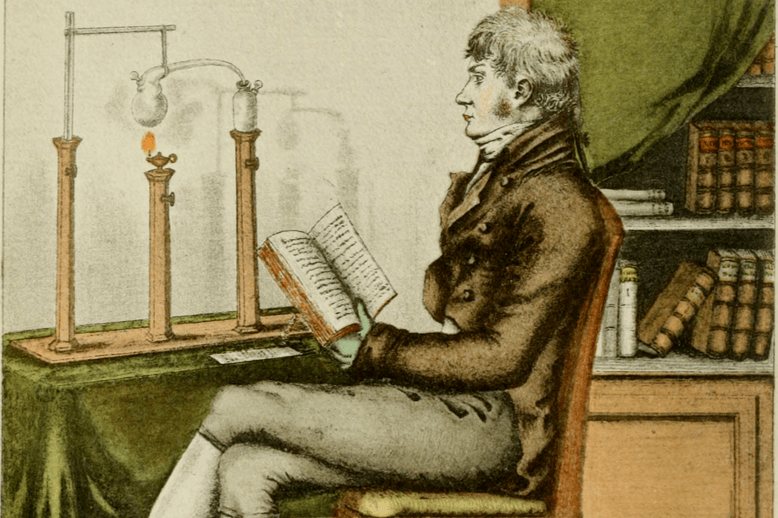
This chapter will be about how the old conception of a life force, with the development of scientific thinking, died. It will probably cover much of the subject matter contained in the Wikipedia article – Vitalism – the relevant parts are given below:
Vitalism is the belief that “living organisms are fundamentally different from non-living entities because they contain some non-physical element or are governed by different principles than are inanimate things”.[1][a] Where vitalism explicitly invokes a vital principle, that element is often referred to as the “vital spark”, “energy” or “élan vital“, which some equate with the soul. In the 18th and 19th centuries vitalism was discussed among biologists, between those who felt that the known mechanics of physics would eventually explain the difference between life and non-life and vitalists who argued that the processes of life could not be reduced to a mechanistic process. Some vitalist biologists proposed testable hypotheses meant to show inadequacies with mechanistic explanations, but these experiments failed to provide support for vitalism. Biologists now consider vitalism in this sense to have been refuted by empirical evidence, and hence regard it as a superseded scientific theory.[4]
Vitalism has a long history in medical philosophies: many traditional healing practices posited that disease results from some imbalance in vital forces.
History
Ancient times
The notion that bodily functions are due to a vitalistic principle existing in all living creatures has roots going back at least to ancient Egypt.[5] In Greek philosophy, the Milesian school proposed natural explanations deduced from materialism and mechanism. However, by the time of Lucretius, this account was supplemented, (for example, by the unpredictable clinamen of Epicurus), and in Stoic physics, the pneuma assumed the role of logos. Galen believed the lungs draw pneuma from the air, which the blood communicates throughout the body.[6]
Medieval
In Europe, medieval physics was influenced by the idea of pneuma, helping to shape later aether theories.
Early modern
Vitalists included English anatomist Francis Glisson (1597–1677) and the Italian doctor Marcello Malpighi (1628–1694).[7] Caspar Friedrich Wolff (1733–1794) is considered to be the father of epigenesis in embryology, that is, he marks the point when embryonic development began to be described in terms of the proliferation of cells rather than the incarnation of a preformed soul. However, this degree of empirical observation was not matched by a mechanistic philosophy: in his Theoria Generationis (1759), he tried to explain the emergence of the organism by the actions of a vis essentialis (an organizing, formative force), stating “All believers in epigenesis are vitalists.” Carl Reichenbach (1788–1869) later developed the theory of Odic force, a form of life-energy that permeates living things.
In the 17th century, modern science responded to Newton‘s action at a distance and the mechanism of Cartesian dualism with vitalist theories: that whereas the chemical transformations undergone by non-living substances are reversible, so-called “organic” matter is permanently altered by chemical transformations (such as cooking).[8]
As worded by Charles Birch and John B. Cobb, “the claims of the vitalists came to the fore again” in the 18th century:[7] “[Georg Ernst] Stahl‘s followers were active as were others, such as the physician genius Francis Xavier Bichat of the Hotel Dieu.”[7] However, “Bichat moved from the tendency typical of the French vitalistic tradition to progressively free himself from metaphysics in order to combine with hypotheses and theories which accorded to the scientific criteria of physics and chemistry.”[9] John Hunter recognised “a ‘living principle’ in addition to mechanics.”[7]
Johann Friedrich Blumenbach also was influential in establishing epigenesis in the life sciences in 1781 with his publication of Über den Bildungstrieb und das Zeugungsgeschäfte. Blumenbach cut up freshwater Hydra and established that the removed parts would regenerate. He inferred the presence of a “formative drive” (Bildungstrieb) in living matter. But he pointed out that this name, like names applied to every other kind of vital power, of itself, explains nothing: it serves merely to designate a peculiar power formed by the combination of the mechanical principle with that which is susceptible of modification.
19th century
Jöns Jakob Berzelius, one of the early 19th century fathers of modern chemistry, argued that a regulative force must exist within living matter to maintain its functions.[8] Vitalist chemists predicted that organic materials could not be synthesized from inorganic components, but Friedrich Wöhler synthesised urea from inorganic components in 1828.[10] However, contemporary accounts do not support the common belief that vitalism died when Wöhler made urea. This Wöhler Myth, as historian Peter Ramberg called it, originated from a popular history of chemistry published in 1931, which, “ignoring all pretense of historical accuracy, turned Wöhler into a crusader who made attempt after attempt to synthesize a natural product that would refute vitalism and lift the veil of ignorance, until ‘one afternoon the miracle happened’”.[11][12][13]
Between 1833 and 1844, Johannes Peter Müller wrote a book on physiology called Handbuch der Physiologie, which became the leading textbook in the field for much of the nineteenth century. The book showed Müller’s commitments to vitalism; he questioned why organic matter differs from inorganic, then proceeded to chemical analyses of the blood and lymph. He describes in detail the circulatory, lymphatic, respiratory, digestive, endocrine, nervous, and sensory systems in a wide variety of animals but explains that the presence of a soul makes each organism an indivisible whole. He also claimed the behavior of light and sound waves showed that living organisms possessed a life-energy for which physical laws could never fully account.[14]
Louis Pasteur (1822–1895) after his famous rebuttal of spontaneous generation, performed several experiments that he felt supported vitalism. According to Bechtel, Pasteur “fitted fermentation into a more general programme describing special reactions that only occur in living organisms. These are irreducibly vital phenomena.” Rejecting the claims of Berzelius, Liebig, Traube and others that fermentation resulted from chemical agents or catalysts within cells, Pasteur concluded that fermentation was a “vital action”.[1]
I also intend to include something of the writings of Wim Holleman on this subject. Given below is a slightly edited extract from his unfinished research report (translated and completed by myself) – A Review of Research on the Biological Transmutation of Chemical Elements:
2. Transmutation in Organic Nature
[Holleman’s use of the word organic differs from that of modern chemistry; nowadays the term refers to chemical compounds containing the element carbon, independent of the source of that carbon; Holleman’s use dates back to a time when all carbon compounds were considered to have originated – directly or indirectly – from living organisms. Organic nature thus refers here to the living, biological world.]
2.1. Vitalism in Agricultural Science at the Beginning of the 19th Century
Towards the end of the 18th century the alchemistic way of viewing matter was mostly extinct. Certain ways of thinking that can broadly be considered as alchemistic have, however, survived for considerably longer. Here belongs the idea that in organic nature transmutations of elements and even the creation of matter can occur spontaneously. The former process may be called biological transmutation; there the origin of these transmutations has mostly become ascribed to a strange organically acting “life force”, which one may speak of as vital energy. Thus it was the opinion of the leading agriculturalist Thaer that under certain circumstances calcium in the plant became changed into silicon, whilst this substance may itself, according to him, be formed from potassium. Lampadius (1832) accepted that silicon existed in plants due to its new creation.
2.2. Biological Transmutation Experiments to 1842
Although voices against the vitalistic ideas were not lacking, no reliable evidence was put forward, so vitalism remained in the beginning of the nineteenth century the main, ruling concept. To this end agriculturalists such as Thaer and Einhof, who apparently enjoyed the greatest fame, contributed considerably. There was no lack of researchers who applied themselves to find experimental evidence for the vitalistic concept.
Work was stimulated in this respect during the years 1795, ’96 and ’97 when the Berlin Academy of Science announced a competition with the following aim (by means of which was considered the possible role of a “life force”, and in the broadest sense the creation and destruction of elements, under the influence of the organic process, belong here as well):
Of which type are the earthly materials which are encountered by means of chemical analysis of native grain species? Do they come into the grains as they are found, or do they come into being by means of the life force and brought into growth by the workings of the plant?The award fell, in 1799, to Johann Christian Carl Schrader (1762–1826) for experiments regarding the formation of minerals in grains. He allowed seeds of wheat, barley and rye, amongst others, to germinate in an artificial medium of flowers of sulphur (that was shown to be completely ash free) and watered them with distilled water. Contamination from dust was guarded for. From analyses of the developed seedlings compared with the seeds used he concluded that mineral matter had indeed been created. [See especially Hegel’s Philosophy of Nature, pp. 289-291.]
Similar experiments were conducted by Braconnot (1807) who enjoyed considerable reputation as a chemist. He allowed plants from seed to grow on different artificial media (flowers of sulphur, red lead oxide, granulated lead, pure river sand and even an organic product; decomposed wood that was extracted with hot water). Although he knew of the importance of an analysis of the growth medium he presented no results there from; he demonstrated the growth media as completely insoluble in water. An analysis of the seed was also missing. Nevertheless he concluded that considerable formation of the mineral components, especially potassium in experiments with mustard seed and radish, had taken place.
Braconnot was, in his vitalistic opinion, even more radical than some of his peers and prophesied a return to the science of the theory of Thales, that everything originates from water. The mineral kingdom should then be considered as
the immense residuum, the big storehouse, in which the organic realm unceasingly disposes of matter. Matter, in all its diversity, should, according to Braconnot, originate by means of fabrication from the proto-water. He supposed that not only water (that in ancient times was considered to be an element) but also all the other elements, such as potassium, are formed from hydrogen and oxygen. The occurrence of fossils, according to him, proved this. Moreover any salts added to the soil should be deleterious to plant growth.Against the above described research stand replications by Lessaigne (1821) and Jablonski (1836) who found not the slightest increase in the amount of ash in the plant above that in the seed. Therewith they joined the critics of vitalism, of which de Saussure (1767 – 1845) may be seen as the most important representative.
De Saussure had already in 1804 let a first summary of his work appear under the title
Chemical Researches on Vegetation. It is an example of careful scientific work in which he was beyond his time. A large part of his opinions about plant physiology, which are still valid today, were already placed and supported in this work by quantitative experiments. As a follower of Lavoisier, Saussure stood strongly with the standpoint of the conservation of matter and referred all transmutation and creation to the realm of fables. He put special emphasis on the necessity in this field to be absolutely certain, with experiments, that the so called created matter was not already present in the environment. So he demonstrated, for example, that the presence of silicates in the plant, which were attributed to the life-force by Lampadius, were in reality determined by the amount of silicon in the soil.The work of Saussure later turned out not to be completely fruitful, chiefly because of his imperfect chemical analyses. This did not however take away his contribution to an understanding of the life processes in the plant, especially his putting exact research methods to the fore, which has been shown to be of fundamental significance.
2.3. An Attempt at an Historical Justification of the Vitalistic Idea
A modern writer of this period of agricultural science (Browne 1944) was surprised by the tenacity with which the vitalistic way of thinking was maintained until c.1840. He viewed this phase as a backward step in the development of science and ascribed it in part to external factors such as a lack of communication between scholars whereby either previous researches such as that by Saussure were overlooked or the uncritical adoption of others such as Braconnot. This applied especially to the changing understanding of the influences of soil and fertilizers on plant growth, which was still at a primitive stage.
The uncertainty that prevailed in this area during the first decades of the previous century can be more or less understood when taken within the framework of the then existing conception of nature. One must place oneself into ways of thinking that included the immediately given macroscopic image of nature and which were totally free from an atomic image of the world that was later to rule physics. Suppose that an agriculturalist determined that during its growth a plant changed its chemical composition. This process happened in front of direct observation in a manner which differed strongly from a chemical process and which is beyond the nature of an organism; it appears to be taken up and subjected to some other, higher power than exists in the inorganic world. With the changing insights into the assimilation and taking up of salts by the root system, etc. still in an initial phase, it is therefore not so astonishing that parallel with the external metamorphosis of the plant, a metamorphosis of the matter from which it is built could be accepted, which itself extends to the transmutation of the elements present in the plant. [The existing laws of physics can explain how, due to the gravitational force, an apple falls down out of a tree; was it the
vital forcethat got it up there in the first place?!]First and foremost, the strong development of inorganic chemistry, bound with the atomic conception, took the upper hand, apparently banishing this vitalistic, holistic thinking. Indeed there is in the atomic world conception no room for the formation of an idea of living substance [i.e. there is no
scientificdifference between, say, biologically fixed nitrogen and nitrogen of an inorganic origin; see however the publications of the Arbeidsbericht of the Institut fur Biologisch-Dynamische Forschung E. V., Darmstadt, Germany]. What it comes down to is that the immutable elements are only able, in this image, to change places. Above all, they are thought of exclusively, as being independent of the universe in which they exist; either of an organism or the inorganic world. There is, in this world, no possible transformation that could carry a life-characteristic.Therefore a situation has gradually arisen wherein, on the one side, the workings of life are not recognised [i.e. the vitalistic force] but on the other side, the inorganic [physical] side of the researched, living being, is exclusively taken. This was an essential development that cannot be valued highly enough. The inorganic could also be viewed in living beings, separately, as it were, in artificial cultures and experiments, which is indispensable to an objective, scientific handling of living nature.
This does not preclude that, in the future, ways shall be found to be able to study life in a manner that will literally enable life’s own intimate character to be seen to its own, full, advantage. It is also certain that, from new observations in this direction [not stated, but presumably those of
Goethean observation, in biology in general, but especially in the fields of biodynamic agriculture and anthroposophical medicine; though Holleman’s own transmutation studies reported here were (outwardly) conducted along purely conventional lines; see section 10], new insights can be expected.The idea of a life force that temporarily played a role in the transition period leading to the atomic conception was, before long, shown to be without content, and was only of use to cover a lack of insight. It marks a point in time wherein the living had to be removed from human consciousness in order to make way for the non-living.
2.4. The End of the Vitalistic Period: Wiegmann and Polstorff’s Experiments
The uncertainty that continued into the third decade of the 19th century regarding the possible role of a life force in plant development led, at the end of this period, to a competition, this time written anonymously and published in the Royal Goettingen Society of Science. Drawn up for the then already strongly altered scientific climate so that, in opposition to the 1806 competition, this time the word life force was not used. The question was:
Are the inorganic elements which are found in plants such essential components of living plants that they are needed for their complete development and are they externally provided?The answer considered for award came from Wiegmann (professor of soil science in Brunswijk) and Polstorff (pharmacist also from Brunswijk). It was based on experiments that for the first time were conducted according to rules that could at present still be valid.
Wiegmann, from the literature of previous researchers, came to the following conclusions:
- That plants need for their complete development a certain quantity of inorganic constituents, that later turn up as ash components.
- That these mineral components are primarily taken up from the soil and for a very much smaller proportion from the atmosphere (falling dust, rainwater or snow).
For a proof of these two propositions the authors set up a series of pot experiments with a synthetic soil, composed of a mixture of cleaned quartz sand with the, as then understood, most important inorganic soil components (added to by a number of humic salts that at that time were considered to be indispensable for plant growth). Control experiments were set up with only the afore mentioned quartz sand for soil. An analysis of it demonstrated that apart from silicon dioxide it contained 2% other soil components. The experimental plants were tobacco, vetch, clover, barley, oats and buckwheat. The cultures were protected against dust and regularly watered with distilled water.
After the plants had come to the end of their development, they were harvested (whereby the roots were washed with distilled water to remove attached soil), dried, ashed, and each ash sample weighed and analysed. After correction for the seed’s ash content, it was found that the experimental plants had taken up 3 times more mineral substance than the controls. The development of the latter was strongly behind those of the experimental plants. Tobacco had taken up the greatest quantity of ash components, the other plants, in their afore named order, less.
With this result the first part of the competition was answered. The last question posed;
… and are they (the inorganic elements) provided externally?led to many different interpretations, but was presumably aimed at evidence for the conservation of elements as according to Lavoisier. It was this interpretation that Wiegmann and Polstorff took. They decided to undertake an experiment that once and for all must bring to a conclusion the fought over problem of biological transmutation and respectively, creation.2.5. The Experimentum Crucis of Wiegmann and Polstorff
To come to a definite conclusion here, the authors followed the technique of their predecessors, but with a soil that consisted of the most inert material known to them at that time. They let 28 seeds of Lepidium sativum germinate in distilled water in a platinum crucible that was filled with fine platinum wire. The crucible was placed under a glass bell jar through which circulated a mixture of 1% carbon dioxide. The seeds germinated and grew into small plants until, after 26 days, they began to die. After drying the crucible and its contents, ashing and weighing obtained 0.0025 grams of ash. The weight of ash obtained from 28 seeds was likewise 0.0025 grams.
Wiegmann and Polstorff made from this experiment the following conclusions:
1. Plants can for a period of time continue living on the reserves of inorganic materials present in the seeds from which they came, but that growth stops once these reserves are insufficient for their further development.
2. The inorganic components of plants can in no way be considered as products of their life process, nor as results of unknown elements, nor exceptional derivatives of the four elements that are known as the building blocks of organic matter.
3. As the plants were isolated from all unwanted sources of inorganic matter, the quantity that they contained cannot be greater than the original amount that was present in the seed.
It was as if the world had been waiting impatiently for Wiegmann and Polstorff’s results so radical was the change brought about in the publications of scientific circles. The last remnants of the vitalistic conception were thus swept away and from here on, in the rest of the century there is (with a single exception, see section 4.3) no more talk of the possibility of biological transmutation.
Should the experiment of Wiegmann and Polstorff be compared with the work of the previous century, then it is the technical advancement that is indeed noteworthy. On further consideration, apart from appreciation for the exact experimental method, there are some doubts whether the publication of 1842 is as decisive as it first appears. Remarkably criticism was never expressed regarding such an important experiment and the negative conclusions were blindly taken up by the scientific world. One cannot thus wholly withdraw from the impression that not only the researchers but also the scientific community harboured the not completely conscious wish to promote the negative decision, to undermine the possibility of biological transmutation so as to force this problem to be shown as being forever settled.
One of the most comprehensive published historical reviews on the subject was Biological Transmutations: Historical Perspective, by Jean-Paul Biberian, of which I give an extract below:
4. During the 19th Century
4.1. Johann Christian Carl Schrader (1762–1826)
From 1795 to 1797, the Berlin Academy of Science announced a competition with the following aim:
Of which types of the earthly materials, which are encountered by means of chemical analysis, of native grain species? Do they either come into the grains as they are found or come into being by means of the life force and brought into growth by the workings of the plant?In 1799, the German scientist Schrader [8] won the competition for his experiments on the formation of minerals in grains. He used the seeds of wheat, barley and rye, amongst others, to germinate in an artificial medium of flowers of sulphur (amorphous sulfur in fine powder) (that was shown to be completely ash free) and watered with distilled water. The dust contamination was prevented during the experiments. From the analyses of the developed seedlings, he compared with the seeds which are planted, he concluded that the mineral matter had indeed been created.
4.2. Henri Braconnot (1780–1855)
In 1807, the highly reputable French scientist Henri Braconnot [9] reproduced Schrader’s experiments. He allowed plants from seed to grow on different artificial media (flowers of sulphur, red lead oxide, granulated lead, pure river sand and even an organic product; decomposed wood that was extracted using hot water). He concluded that considerable formation of the mineral components, especially potassium in experiments with mustard seed and radish, had taken place.
4.3. Louis Nicolas Vauquelin (1763–1814)
In 1799, the French chemist Louis Vauquelin [10] became intrigued by the quantity of lime which hens excrete every day. He isolated a hen and feed it a pound of oats, which were analyzed for lime (CaO). Vauquelin analyzed the eggs and faeces and found that five times more calcium was excreted than was consumed. He observed, not only the increase of calcium but also a subsequent decrease of silicon. He is certainly the first scientist to have demonstrated the biological transmutation of silicon into calcium.
In his conclusion he remarked that a loss of only 1.274 g of silica cannot account for an increase of 14.118 g of limestone. He concluded that lime had been formed, but could not figure out how it happened. Further more, he encouraged other scientists to replicate his experiment.
4.4. Albrecht Thaer (1752–1828)
In the 18th century organic reactions are attributed to a “life force”. Thaer [11] showed that under some circumstances, calcium transforms into silicon. According to him, silicon could come from potassium. Under certain circumstances calcium in the plant became changed into silicon, whilst this substance may itself be formed from potassium
4.5. William Prout (1785–1850)
In 1822, the English physiologist, Prout [12] studied chicken eggs in incubation. He found that hatched chicks had more lime (calcium) in their bodies than originally present in the egg, and it was not contributed from the shell.
4.6. Wilhelm Augustus Lampadius (1772–1842)
In 1832, Lampadius [13] thought that plants themselves create silicon in plants.
4.7. Vogel
In 1844, a German researcher named Vogel planted watercress seeds (Lepidum satirum) in a bell jar in crushed glass in a controlled air environment. They were fed nothing but distilled water, yet when grown they contained more sulphur than had been in the seeds originally. J.J. Berzelius reported the experiment in his book [14]. Vogel’s answer was that sulphur was not a simple element or that sulphur was introduced from sources unknown.
4.8. Choubard
In 1831, Choubard [15] germinated watercress seeds in clean glass vessels and showed that the sprouts contained minerals, which did not previously exist in the seeds.
…
7. Negative Experiments
Even though many positive experiments have been performed by indicating the reality of the phenomenon of biological transmutations, several experiments contradict these findings.
7.1. Nicolas Théodore de Saussure (1767–1845)
In 1804, de Saussure published his work: “Recherches chimiques sur la végétation”, Nyon, Paris (Chemical Researches on Végétation). As a follower of Lavoisier, Saussure stood strongly with the standpoint of the conservation of matter and referred all transmutations and creation to the realm of fables. He puts special emphasis on the necessity of this field to be absolutely certain, with experiments, that the so-called created matter was not already present in the environment. So he demonstrated, for example, that the presence of silicates in plants, which were attributed to the life-force by Lampadius, was in reality determined by the amount of silicon present in the soil.
7.2. Jean-Louis Lassaigne (1800–1859)
Lassaigne initially worked in the laboratory of Louis-Nicolas Vauquelin. He was a professeur at Ecole Vétérinaire d’Alfort. His works were published in 1821 with the germination of grains supported the findings of de Saussure. His later works on the development of chicks contradicted the results of Vauquelin.
7.3. P.E. Jablonski
In 1836, Jablonski found no increase in the amount of ashes in the plants above the one in the seed. Therefore, criticizing Schrader and Braconnot.
…
[8] C. Schrader, Zwei Preisschriften uber die Beschaffenheitund Erzengung der erdinge Bestandtheile von Getreidearten (Berlin, 1800). Cited in, C.A. Browne, A Source Book of Agricultural Chemistry (1944), p. 221, http://books.google.com/books?id=B8wJAop_EBUC&pg=PA221. J. H. Muirhead, Contemporary British Philosophy: Personal Statements, Volume 12 (2005), pp. 289–291, http://books.google.com/books?id=nFvkrC-ADT0C&pg=PA289.
[9] H. Braconnot, Sur la force assimilatrice dans les vegetaux, Annales de Chimie 61 (1807) 187–246. C.A. Browne, A Source Book of Agricultural Chemistry (1944), p. 221, http://books.google.com/books?id=B8wJAop_EBUC&pg=PA221.
[10] L.N. Vauquelin, Expériences sur les excréments des poules, comparés à la nourriture qu’elles prennent, et Réflexions sur la formation de la coquille d’œuf, Annales de Chimie 29 (30 Nivose VII, 19) (1799) 3–26.
[11] A. Thaer, Grundsätze der rationellen Landwirthschaft [Principles of rational agriculture], Volume 2 (Berlin, 1809–1812), pp. 49–50, 56, 107–108, 268. Cited in C.A. Browne, A Source Book of Agricultural Chemistry (1944), pp. 179–181.
[12] W. Prout, Phil. Trans. (1822) 377. Cited in, Needham, Joseph (1931), Chemical Embryology, Volume 3, C.U.P., pp. 1260–1262.
[13] W.A. Lampadius, Erdmann’s J. für technische und ökonomische Chemie 15 (1832) 289–318. Cited in, L.W.J. Holleman, The Biological Transmutation of Chemical Elements: 2.1 Vitalism at the Beginning of the 19th Century.
[14] J.J. Berzelius, Treatise on Mineral, Plant and Animal Chemistry (Paris, 1849). Cited in, R. A. Nelson, Adept Alchemy, Part II, Chapter 8, Biological Transmutations.
[15] R.A. Nelson, Adept Alchemy, Part II, Chapter 8, Biological Transmutations.

 Rethinking the Nature of Substance
Leave a reply to Chapter 1: The Origins of Chemistry – Rethinking the Nature of Substance Cancel reply