The original book concept was big and ambitious. I tried to simplify it. But each of its parts increasingly appeared to form a single coherent whole. So I am now in the challenging process of bringing all of its parts together in such a way that each part illuminates all of the others, enabling their relations to be clearly visible, and the concepts to be communicated, easier seen, and understood.
Rudolf Steiner said we must think for ourselves, not merely copy or paraphrase his words or writings. Since this book is almost entirely based on Steiner’s ideas, I have chosen to examine his indications in the light of other historical sources. I am therefore interested in discovering the ideas of others who appear to have possessed either the same or closely related ideas to those of Steiner. And I was surprised to find them in the philosophical writings of the Ancient Greeks. Perhaps I shouldn’t have been. The Ancients were closer to the natural world, and to the cosmos as a whole, than we are today.
I have learned that Plato and Aristotle were realists – they studied the world as they found and experience it. Anti-realists, or nominalists, believe that it is only possible to understand that which we ourselves have created – they believe that our ideas are nothing more than our own invention (based on our observations). They believe it is impossible to know the mind of God or the being of Nature. Such a belief began to take hold about a thousand years ago, and has become the dominant mainstream, academic belief during the past five hundred.
So academic scientists created simplified mathematical models of the world – which grew ever more sophisticated with time. However, their models, with increasing sophistication, have become increasingly divorced from our direct personal experiences of the world – a world of which we are an integral part. See, for example, Heisenberg on Goethe.
The aim of this book is to explore the incredible journey made by observers of Nature – philosophers and scientists – who have enabled us to live in the fantastical, technological world which we inhabit. This first part of my book provides a foundation for its other two parts.
However some scientists have made observations that did not fit the existing mathematical models of mainstream science. Wim Holleman was one of several such scientists. His experiments indicated that plants, and by implication, animals and human beings, are capable of alchemy. A detailed presentation and consideration of the evidence for such controversial claims forms the second part of the book.
Holleman proposed that any future chemical element transmutation research should not therefore be based on pre-existing mathematical models. New, Goethean, scientific methods should be followed – based on direct observation of the material phenomena. It was Rudolf Steiner who first described Goethe’s scientific world view. Steiner later took Goethe’s ideas further and encouraged others to do the same. Scientists such as George Adams and later, Nick Thomas – based on Rudolf Steiner’s own indications – developed new mathematical descriptions of the challenging spiritual realm(s) that Steiner had described in his many books and lectures. In a letter, shortly before his death, Thomas wrote that his research showed much promise. He hoped that it may enable – with further work – the challenging phenomenon of biological transmutation to become better understood. The mathematics involved in his work were highly advanced – beyond my abilities. But – after studying his two books on the subject – I believe that (perhaps naively) I have at least the beginnings of an understanding of his work. This is to be the third – concluding – part of the book.
A number of considerations require addressing (the original reasons for wishing to split the original book concept into two):
- To do justice to all three parts of the book a lot of serious research needs to be done on my part – far more than I had originally envisaged.
- The audience for a book exploring the philosophical basis of Steiner’s scientific ideas as a whole is not necessarily the same as the audience for a book about biological transmutations.
- The book that I was originally asked to write was one covering:
- The phenomenon of biological transmutation
- The mathematical indications of Nick Thomas
- And [some of] the scientific ideas between.
- The overarching theme should be the harmony of the spheres.
- The magnum opus I would like to write is a book linking Goethe and Steiner with the writings of the Ancient Greeks. However, it would require a lot of research…
To answer these considerations:
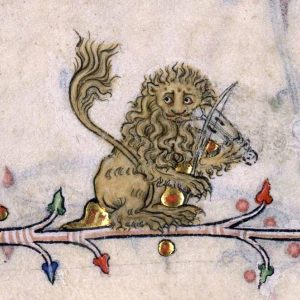
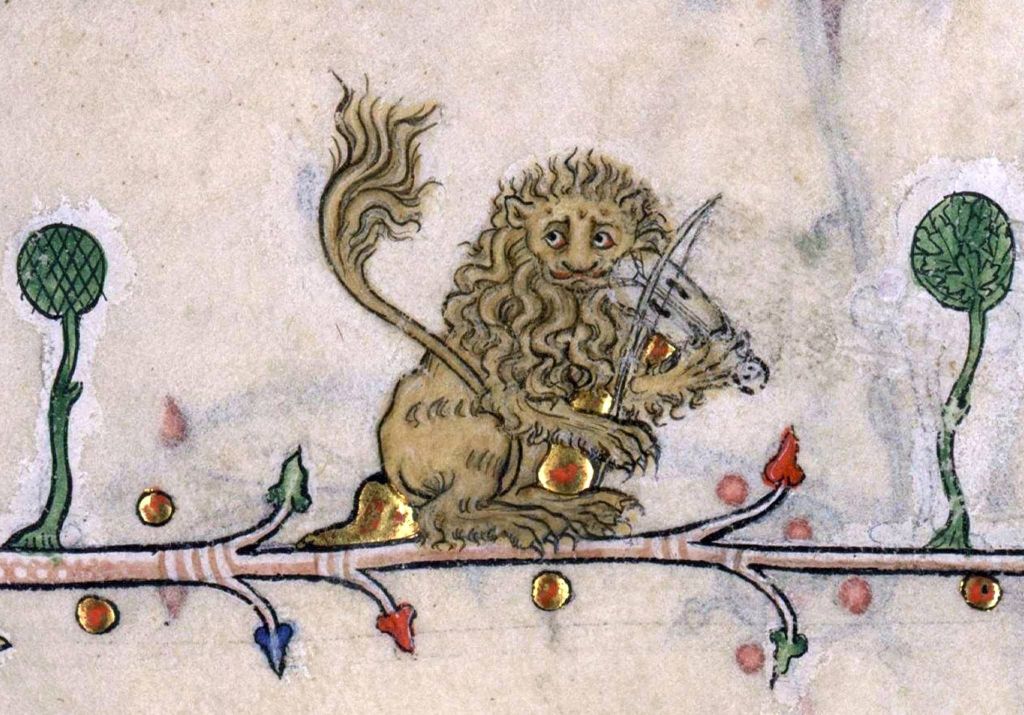
- My discovery that the lion in Steiner’s quote – “Are not they [scientists] themselves already speaking frankly of a transmutation of the elements? Observation of several elements has tamed the materialistic lion in this respect…” – was a reference to alchemy, became seen by me as a golden thread that tied the whole book together.
- Alchemy stretches from prehistory, by way of the Greeks, right up to present day conceptions of the atom and its transmutations.
- Alchemy is also about the spiritual journey taken by a someone, such as myself, who is searching for truth. As a former atheist and academically trained scientist, I find many of Steiner’s teachings extremely challenging; as an open-minded philosopher, and seeker of truth, I may have a map indicating my journey, but I do not as yet know what I will discover along the way.
- The extensive research required for me to write this three part book is enabling me to develop into the person I need to become in order to succeed in this task.
- I now believe that the golden alchemical thread I have discovered may enable a wide variety of readers to find the books contents very much worth reading. I am fortunate to have found someone who is more than just an experienced proof reader who is supporting my journey. She believes that there are a number of anthroposophical book publishers who could be interested in its publication.
- I feel that the main themes now have a stronger integration than before, especially with that of the harmony of the spheres.
- There are many aspects of Goethe, Steiner and the Ancient Greeks I can explore in greater depth at a later date. However, the book I really wish to write is this one.
When asked how long it would take me to write this book, I have replied “how long is a piece of string?!” On reflection, I provisionally proposed seven years. I started in December 2017, so I am aiming for December 2024.
This website was created before I found a proof-reader, in the early summer of 2020. Since then, it has not been updated, with the exception of the Table of Contents, the Preface and this Foreword. Further chapters will be updated shortly.

 Rethinking the Nature of Substance
Leave a reply to Book Two: Goethe, Steiner and the Ancient Greeks – Biodynamics and the Taming of the Materialistic Lion Cancel reply