
I believe Rudolf Steiner has said (I forget where) that we should work things out for ourselves and not take his word as Gospel. So, without the benefit of being able to read directly from the Akasha chronicle, how might I accept the possibility of peripheral etheric forces?
If an idea is universal, it is often the case that someone else in history has been able to ‘see’ it too. I have found this to be true for most of Steiner’s ideas relating to both natural and moral philosophy. But until recently I hadn’t been able to find others before him describing peripheral etheric forces. (Please don’t confuse Steiner’s ethers with the nineteenth century physicists luminiferous ether.)
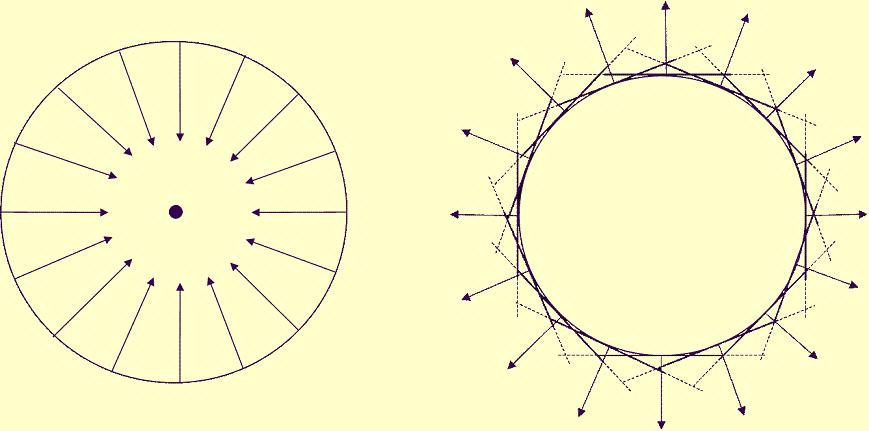
Physical forces are point centred – gravity is the example normally chosen.
Rudolf Steiner’s etheric forces are described as suctional, acting from an infinite periphery.
And then I read Nick Thomas, in an article introducing his potentially controversial rethinking of the concept of gravity, based on his following up of a number of indications by Steiner: https://www.waldorflibrary.org/articles/417-what-is-gravity
Here Thomas refers to Kepler [possibly] believing that angels push the planets round on their orbits. So, investigating this further, I found the image shown below from Dynamics of the celestial spheres – Wikipedia. However, angels turning cranking handles was (almost but) not quite what I had hoped for!
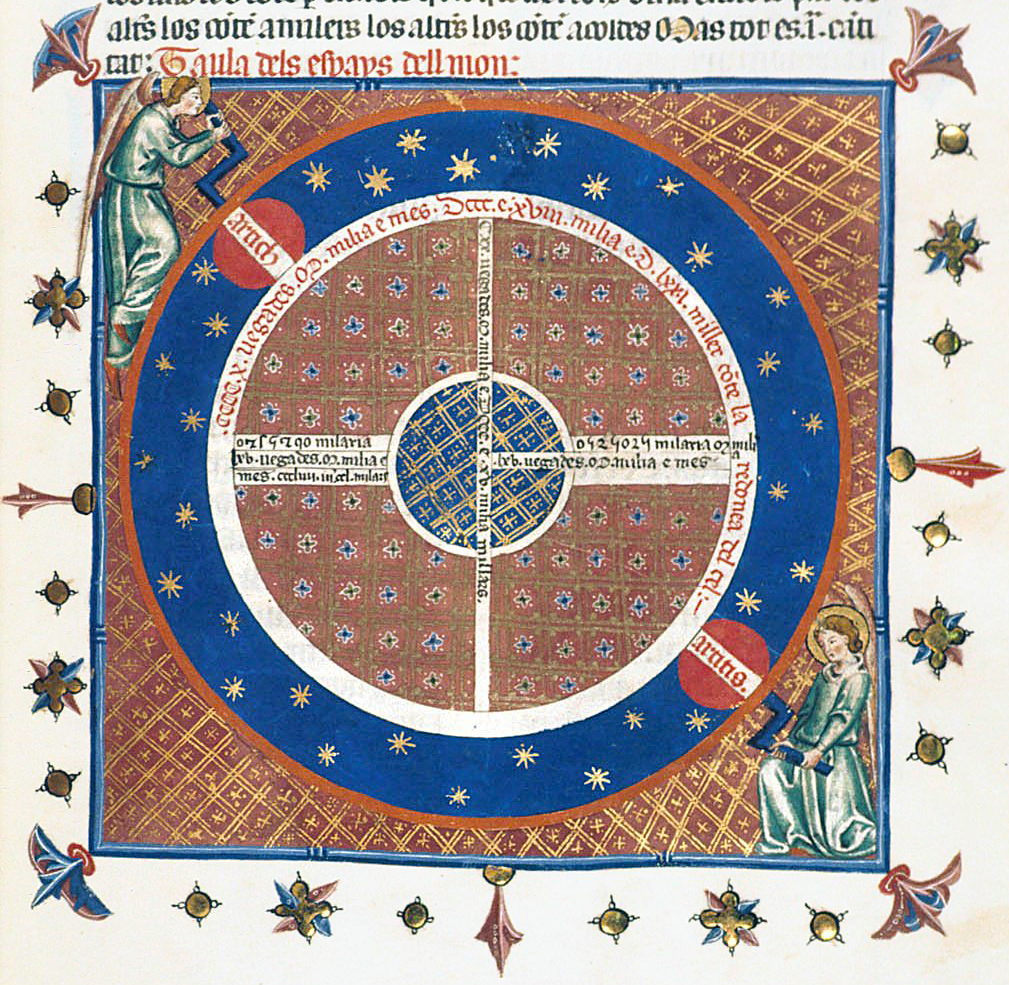
And then I discovered – Celestial spheres – Wikipedia – and the following image (slightly cropped by myself):
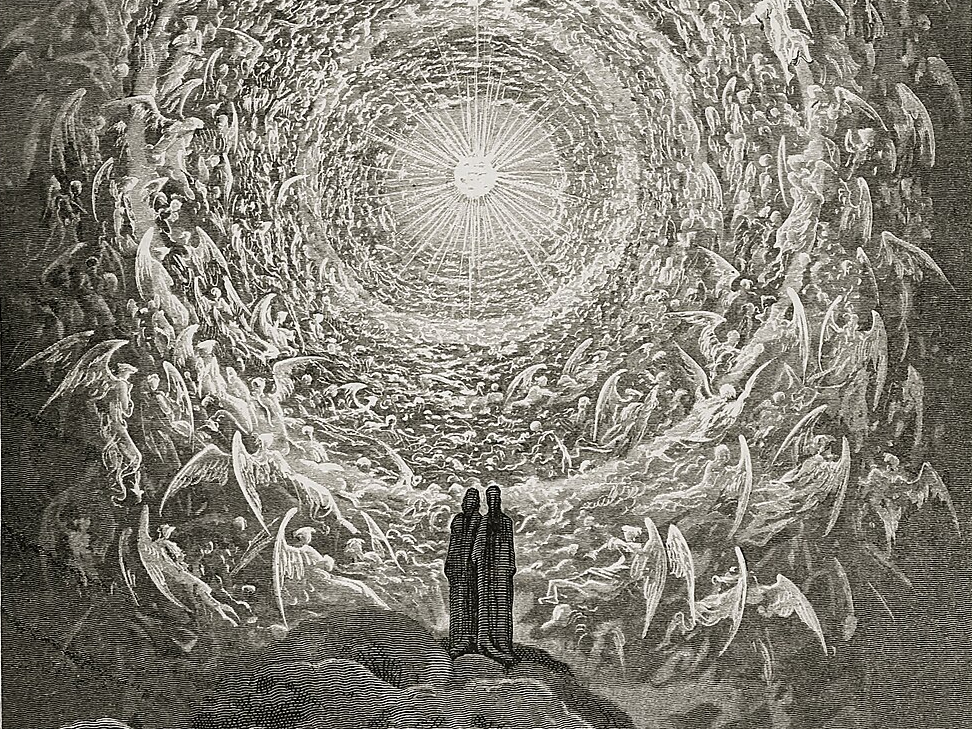
And the following quote from Aristotle’s On The Heavens II, 13, 293b 1–14:
‘[The Pythagoreans] hold that the most important part of the world, which is the centre, should be most strictly guarded, and name the fire which occupies that place the ‘‘Guard-house of Zeus’’, as if the word ‘‘centre’’ were quite unequivocal, and the centre of the mathematical figure were always the same with that of the thing or the natural centre. But it is better to conceive of the case of the whole heaven as analogous to that of animals, in which the centre of the animal and that of the body are different. For this reason they have no need to be so disturbed about the world, or to call it in a guard for its centre: rather let them look for the centre in the other sense and tell us what it is like and where nature has set it. That centre will be something primary and precious; but to the mere position we should give the last place rather than the first. For the middle is what is defined, and what defines it is the limit, and that which contains or limits is more precious than that which is limited’.
Quote from Miguel A. Granada (2004) Aristotle, Copernicus, Bruno: Centrality, the principle of movement and the extension of the Universe, Studies in History and Philosophy of Science Part A · March 2004
DOI: 10.1016/j.shpsa.2003.12.007
I could be wrong, but this seems like the same concept to me – of centric and peripheral forces. However, it wasn’t until the nineteenth century that the mathematics of projective geometry had developed sufficiently for Rudolf Steiner to give indications for an exact visualisation of the forces concerned.
 Rethinking the Nature of Substance


Leave a comment