
| This website is under reconstruction! Please be patient. The book is in the process of being researched, reviewed and written. – The Table of Contents – The Home page – links via either the image or the title at the top of the page – contain all my current and previous drafts, thoughts and notes. |
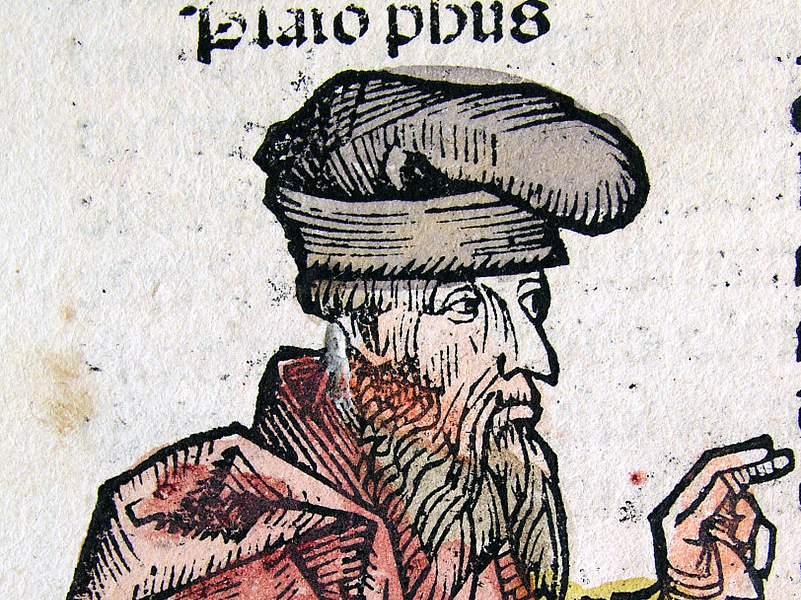
I am sad to say that I have chosen to completely rewrite my early drafts of prehistoric and Ancient Greek history almost in their entirety ([Old] Chapter1: Parts 1, 2, 3, 4, and 5). They are to be replaced by two new and hopefully more relevant chapters. Their replacements concentrate on the possibly controversial Idea1 of Plato’s Philosopher, who provides a direct link to Goethe and Steiner’s worldview (Chapter 1). This very nicely links to Aristotle’s further development of Plato’s ideas (Chapter 2). They encompass both an understanding of Plato and Aristotle’s holistic worldview and their epistemology – how we gain knowledge of things. It will be noted that key to understanding Aristotle’s epistemological logic is the difference between learning (gaining knowledge) and explaining knowledge to others. My guidance is largely provided by the highly respected writings of Mary Louise Gill, with help from the writings of Joe Sachs, as well as Jakob Ziguras, amongst others.2
My intention is to facilitate an understanding of a worldview in a single volume that is bigger than I can manage to write about in all of its individual details. Therefore some elements, however precious, will inevitably get left out in order for a balanced picture to be created in as few brush strokes as possible. However, these older writings do contain much that may possibly be of interest both to myself as well as others and – who knows – some of its content may find a new home in one way or another.
Also of possible interest is that it records my surprise discovery that these early Greek philosophers agreed with each other far more than most of the literature about them might suggest. The key was the beginnings of an understanding of the Ancient Greek concepts of doxa and logos used by Parmenides and Heraclitus. At best one creates doxa or personal opinions from sense perceptions – experiences that belong only to that individual. One can only create a logos, a verbal account, using words drawn from concepts seen with the mind and shared with others. Ideas are eternal – shown to Parmenides by the Goddess Aletheia, Truth or perhaps better translated as Revelation, the existence of which are very much independent of us mortals.3
So, for example, there are Parmenides and Heraclitus, as well as Plato and Aristotle. What we have largely inherited from the secondary literature are one-sided caricatures of their ideas. To understand how and in what ways they may have agreed required a return to their own texts or what few fragments have survived. I must point out that the apparent sharing of ideas should not be surprising if the Ideas they are working with have an existence independently of them. This may be explain why Plato was supposed to be so upset by the writings of Democritus that he wanted them all burnt!4
References
- Aristotle (1995) Aristotle’s Physics, translated, with introduction, commentary and an explanatory glossary, by Joe Sachs, Rutgers University Press.
- Aristotle (2002) Aristotle’s Metaphysics, translated, with introduction, notes and bibliography by Joe Sachs, Green Lion Press, Santa Fe, New Mexico.
- Diogenes Laërtius, Lives and Opinions of Eminent Philosophers, ix. 40.
- Gill, Mary Louise (1991) Aristotle on Substance: The Paradox of Unity, Princeton University Press.
- Gill, Mary Louise (2012) Philosophos: Plato’s Missing Dialogue, Oxford University Press.
- Heidegger, Martin (1992) Parmenides, Translated by André Schuwer and Richard Rojcewicz, Indiana University Press.
- Osborne, Catherine (2004) Presocratic Philosophy: A Very Short Introduction, Oxford University Press.
- Plato (2007) Republic, translation, glossary and introductory essay by Joe Sachs, Hackett Publishing.
- Steiner, Rudolf (1918 | 1939) Philosophy of Spiritual Freedom, translation by Hermann Poppelbaum of 2nd edition of Philosophie der Freiheit, R. Steiner Pub. Co., Anthrosophic Press, London, New York: https://rsarchive.org/Books/GA004/English/RSPC1949/PPSA_preface1.html
- Steiner, Rudolf (1918 | 1964) Philosophy of Freedom, translation by Michael Wilson of 2nd edition of Philosophie der Freiheit, Rudolf Steiner Press: https://rsarchive.org/Books/GA004/English/RSP1964/GA004_intro.html
1. Like others before me trying to communicate such things, I use a capital ‘I’ in Idea to denote the actual entity that our mind’s eye can ‘see’. I use a lower-case ‘i’ in idea for the imperfect mental picture which we form based on such an Idea. For further details see the 1939 and 1964 translators’ introductions by Poppelbaum and Wilson to Steiner’s Philosophie der Freiheit.
2. See references above.
3. Heidegger, Martin (1992) Parmenides, Translated by André Schuwer and Richard Rojcewicz, Indiana University Press.
4.Diogenes Laërtius, Lives and Opinions of Eminent Philosophers, ix. 40: “Aristoxenus in his Historical Notes affirms that Plato wished to burn all the writings of Democritus that he could collect.“
 Rethinking the Nature of Substance
Leave a comment