
| This website is under reconstruction! Please be patient. The book is in the process of being researched, reviewed and written. – The Table of Contents – The Home page can be accessed via links at the top of the page – click on either the image or the title – and contain all my current and previous drafts, thoughts and notes. |
The central theme of this book is a rethinking of the mainstream, academic conception of the nature of substance. It is therefore concerned with a transformation in our understanding—a spiritual or alchemical journey. The book is divided into three parts, each composed of seven chapters.
Part I concerns itself with the ideas necessary for an understanding of that which is to be transformed—namely mainstream (Western) philosophical and scientific conceptions of substance, as developed through history.
Part II concerns the reason for this book—that in order for the biological transmutation phenomenon[stet] to be understood, we require a transformation (paradigm shift) in our understanding of the nature of substance.
Part III concerns the final and most challenging stage of our journey—the transformation itself. This involves an attempt to apply the spiritual scientific indications of Rudolf Steiner to the development of a rethinking of the nature of substance, matter and the so-called atom.
Part I
After this introduction, Chapter 2 starts our journey with a consideration of the earliest beginnings of chemistry, and also explores several of the important mathematical and philosophical concepts which will be of importance later in this book. It attempts to understand these ideas as much as possible through the eyes of those who originally saw them, guided by the indications of Steiner and others.
Chapter 3 continues the development of chemistry, from the qualitative science or art of alchemy—in which the alchemists themselves played an essential role in the laboratory processes—, to Lavoisier and the beginnings of quantitative modern chemistry—in which the role of the chemist is now that of a detached scientist. Our journey includes the Medieval developments of philosophy, and the transition of science from realism to nominalism (see ‘box’). The chapter ends with Lavoisier’s ‘proof’ and formulation of the law of the conservation of mass—a ‘law’ which brought about the end of alchemy.17
Chapter 4 concerns the idea that living organisms possess a mysterious vital force which, it was believed, accounted for their extraordinary chemistry. This belief was ended, at least for mainstream science, in the 1840s—though the experiments that ended it will be shown to have been far from conclusive. Of interest is that Rudolf Steiner believed that it was right for this ancient belief to have been superseded, for only then could his later scientific conception of the four ethers be accepted.18
Chapter 5, highlights the story of Baron Albrecht von Herzeele who refused to believe that plants and animals were now supposed to obey Lavoisier’s law of the conservation of mass. Inspired by the writings of Goethe, his many experiments demonstrated that plants may indeed be capable of transmuting chemical elements. His work was described by the philosopher Preuss who held the same view; that it is the plants which make the soil, and not the soil which makes the plants.
Chapter 6 deals with the entity at the centre of this nineteenth century controversy; the atom. Despite increasing belief in this invisible entity, evidence for the invisible atom remained hypothetical. The chapter ends with the eventual acceptance of the existence of the atom in 1908, at least by most of its former sceptics, after the Nobel Prize winning work of Einstein and Perrin.
Meanwhile, just when scientists thought that their classical, essentially mechanical, model of the universe was more or less complete, the discovery of radioactivity, electric rays, and other equally strange, essentially sub-natural, phenomena were discovered which required the known laws of physics to be changed. Chapter 7 explores this newly discovered hidden realm of sub-nature, the study of which was called quantum mechanics. They used the word quantum because the observed phenomena—when not behaving like waves—behaved as if they were discrete ‘packets’ of energy—quanta. They chose to use the word mechanics because they used mathematics which had previously been developed to describe physical, mechanical, systems. This was despite their having discovered that this was a strange, hidden, occult, sub-natural realm that bore little or no relation to the physical realm for which such mathematical forms were originally intended. The imagery associated with the mathematics was therefore merely a convenient fiction and any understanding was only nominalist rather than realist in nature.
Part II
The second part details the experimental evidence for the biological transmutation of chemical elements. By critically assessing this evidence in the light of what has been learnt from the first part of the book, it is hoped that new insights may be attained regarding both the quality of the methods used, as well as the interpretations of their results. Mainstream scientists strongly believe that—based on scientific theory that has gained the status of dogma—such a phenomenon is impossible. ‘Atom smashing’ experiments revealed the structure of the atom. Chemical element transmutations were identified as high energy reactions between atomic nuclei. Such high energies are far beyond those attainable by the chemical processes in living organisms. Such high energies would be lethal to life. Therefore mainstream science believes that all such biological transmutation results are either naive errors, delusional, or even fraudulent.19 However, despite this prejudice, a limited number of experiments have been conducted, though the results have been mixed.
Chapter 8 tells of the experiments of Rudolf Hauschka, conducted after his rediscovery of the biological transmutation experiment publications of Herzeele. Hauschka’s experiment (and Baumgartner’s later attempt at a replication) was an attempt to replicate Herzeele’s experiments—though only from the point of view of his attempted refutation of Lavoisier’s law of the conservation of mass. Hauschka, following indications from Steiner, looked to changes in mass in connection with the phases of the moon.
Chapter 9 details biological transmutation experiments conducted during the twentieth century up to the popularisation of the phenomenon by the Frenchman Corentin Louis Kervran in the 1960s. His main contribution, considered in detail in Chapter 10, was the proposal of a mechanism which he claimed was able to account for the observations which were otherwise considered impossible by mainstream science.
Unfortunately both Kervran’s experimental methods and his theoretical mechanism have been submitted to severe criticism, not only by mainstream science, but also by some of those who believe in the phenomenon. This includes Vladimir Vysotskii, a nuclear physicist from the Ukraine. His biological transmutation experiments have provided the strongest evidence I have seen. They are detailed in Chapter 11. He is also involved with the so-called phenomenon of cold fusion. This phenomenon of low energy nuclear transmutations involving deuterium (heavy hydrogen) and platinum, though much better studied than biological transmutations, is also disbelieved by the majority of mainstream scientists! Nevertheless, Vysotskii’s knowledge of quantum mechanics has enabled him to propose that it is the dynamic nature of the biological environment that enables micro-organisms, and by extension, plants and animals to achieve what is supposed to be impossible.
Chapter 12 focuses on the scientist whose biological transmutation research inspired the writing of this book; Wim Holleman.20 As a chemist he had been particularly inspired by Steiner’s fifth Agriculture lecture (as quoted above). His experimental results with the green alga, Chlorella, were unexpected. Sadly they have not yet been repeated.
Even more intriguing were the results of Jean-Paul Biberian. His Marinobacter experiment was conducted with the hope of a replication of Holleman’s successful experiment. Biberian’s experimental details are given in Chapter 13. Nevertheless, his experiments were only of a preliminary nature and have not yet been repeated.
Chapter 14 looks at the evidence for this challenging phenomenon as a whole. Is mainstream science right to be sceptical? Can a coherent pattern be seen through the wide range of results?
Part III
Wim Holleman recommended that the phenomenon might best be investigated by way of a Goethean scientific methodology. The third part of this book starts with Chapter 15’s exploration of the scientific work and ideas of Johann Wolfgang von Goethe—German poet, philosopher, and ‘observer of nature’. His realist belief—no matter without spirit (a Universal, Ideal Form), no spirit without matter—is Aristotelian.21 His methodology, and the insights derived therefrom, are explored in some detail, for it forms the foundation for the rest of this book.
Chapter 16 details how Goethe’s worldview formed the philosophical basis of Rudolf Steiner’s early natural philosophical publications. Steiner later gave indications for a new natural scientific worldview based, not only on Goethean scientific foundations, but also alchemy, Ancient Greek philosophy, recent developments in projective geometry, and his own spiritual insights.22 In particular was his concept of the four ethers, of greatest importance to this work, and as far as I can ascertain, Steiner was the first to conceive of such cosmic forces. This chapter describes his indications for the nature of the atom in terms of this etheric realm.
In Chapter 17 it is shown how Steiner’s indications were taken up by several scientists, including the chemist and mathematician George Adams (Kauffman), with the assistance of Olive Whicher. Her inspiring and beautiful drawings helped introduce Adams technical work to a much wider audience.
Chapter 18 takes our transformation story to its technical, mathematical limits. It shows how Adam’s projective geometry work was in turn taken further by Nick Thomas in his books on a science based on his proposed linkage between (physical) space and (spiritual-etheric) counter-space. The projective geometry used was expressed analytically by Nick Thomas in his books. My task here is to make his work intelligible to a non-mathematician. The reward is a deeper understanding of the nature of the atom, which it will be shown to be just one manifestation of substance and matter.
It is in Chapter 19 that we learn how Nick Thomas’ insight (and hard work!) enables our goal to be achieved (or, at the very least, the possibilities of doing so). By following the indications of Rudolf Steiner, Thomas was able to independently derive the Schrödinger wave equation. I cannot emphasise enough how truly significant this result is. Schrödinger’s wave equation (and its mathematical equivalents) forms the basis of the mainstream understanding of atomic and sub-atomic phenomena. Mainstream science developed quantum mechanics to describe the behaviour of such sub-natural entities. As is explained in Chapter 7, it is based on entirely mechanical, mathematical models which avoid all attempts at meaningful understanding. It is just possible that Nick Thomas’ work may enable—at least in part—a meaningful understanding of this challenging subject. This transformation of meaning may indeed facilitate a rethinking of the nature of substance.
Chapter 20 takes what we have learnt and raises it to a higher level. When I first started this work I was told by the Goethean phenomenologist Dick van Romunde that I should meditate on the harmony of the spheres. This Pythagorean Idea lies at the heart of chemistry, the nature of chemical elements, and their transmutation.
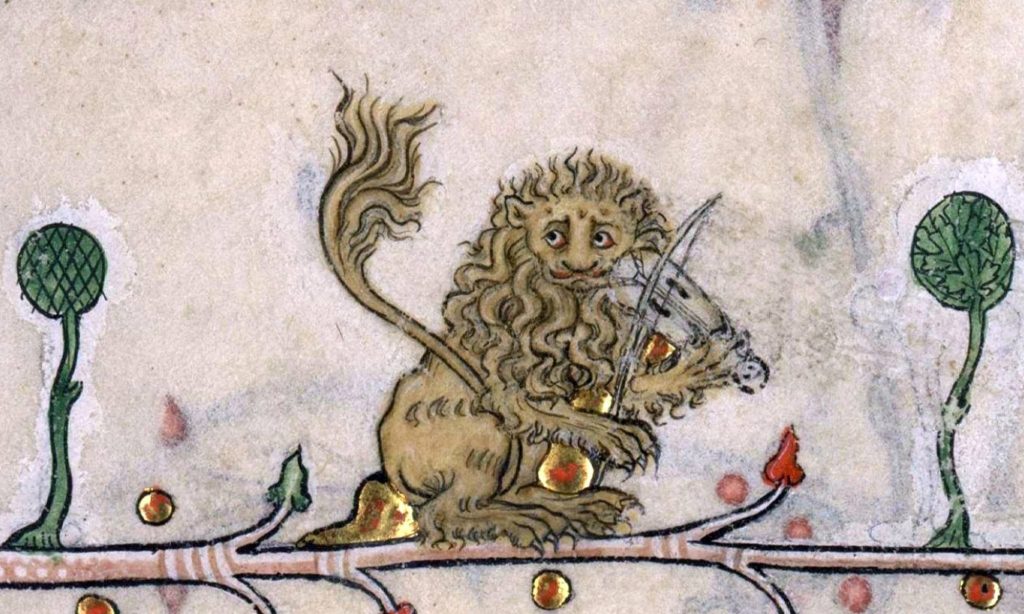
Chapter 21, our concluding chapter, draws everything together. It is a review of our journey towards a rethinking of the nature of substance, chemical elements, and the so-called atom. Mention will also be made here of other aspects so far omitted, such as homeopathy, water, cosmic influences, and spiritual beings. We are still a very long way away from an understanding of the phenomenon of biological transmutations. Much more practical research is required—to be able “to [completely] tame the materialistic lion”. Therefore practical recommendations are also given here for any future studies of this most challenging of phenomena—the alchemy in life processes. This chapter gives an overview of biodynamics and why a detailed conception of the nature of substance is required. Also, wider considerations for future experimental research will be discussed.
17. “Nothing is lost, nothing is created, everything is transformed.”
18. See Chapters 15 and 16.
19. Mallove (2000).
20. Wim Holleman’s work inspired the creation of the Professor Dr. L.W.J. Holleman Stichting—the organisation which commissioned the writing of this book. It was created after his death in 1994 to encourage and support further research and understanding of his biological transmutation interests. See http://www.holleman.ch for details.
21. This is an Aristotelian concept, though he may well have discovered this truth himself (ZEMPLÉN, GÁBOR ÁRON. “Structure and Advancement in Goethe’s Morphology.” Marking Time: Romanticism and Evolution, edited by JOEL FAFLAK, University of Toronto Press, Toronto; Buffalo; London, 2017, pp. 147–172. JSTOR, http://www.jstor.org/stable/10.3138/j.ctt1x76gzb.11. Accessed 20 July 2020).
22. One might say that projective geometry is the Universal geometry, at the heart of all possible geometries, including the Euclidean geometry which describes our physical three-dimensional space, the curved spacetime of Einstein, and the negative- or counter-space proposed by Steiner to be used to understand the no-material etheric realm explored in Chapter 17.
 Rethinking the Nature of Substance
Leave a comment