
Biodynamics and the Taming of the Materialistic Lion – an introduction

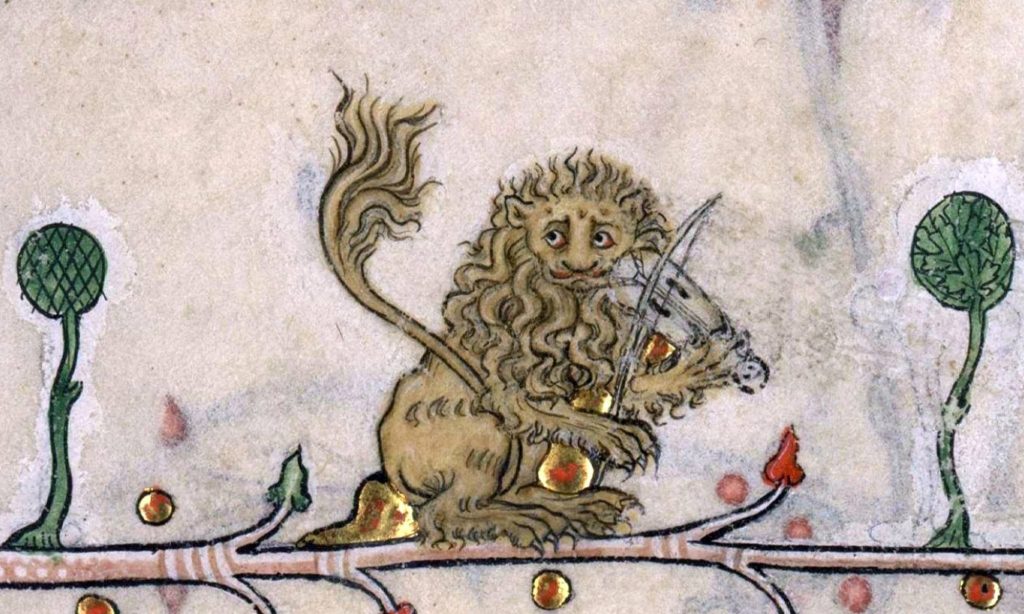
“There is something you must know in this connection. For the scientists of to-day, they will no longer argue that there is such entire confusion on our part as they would have done a short time ago. Are not they themselves already speaking frankly of a transmutation of the elements? Observation of several elements has tamed the materialistic lion in this respect, if I may say so. Processes, however, that are taking place around us all the time are as yet utterly unknown. If they were known, people would more readily believe such things as I have just explained.
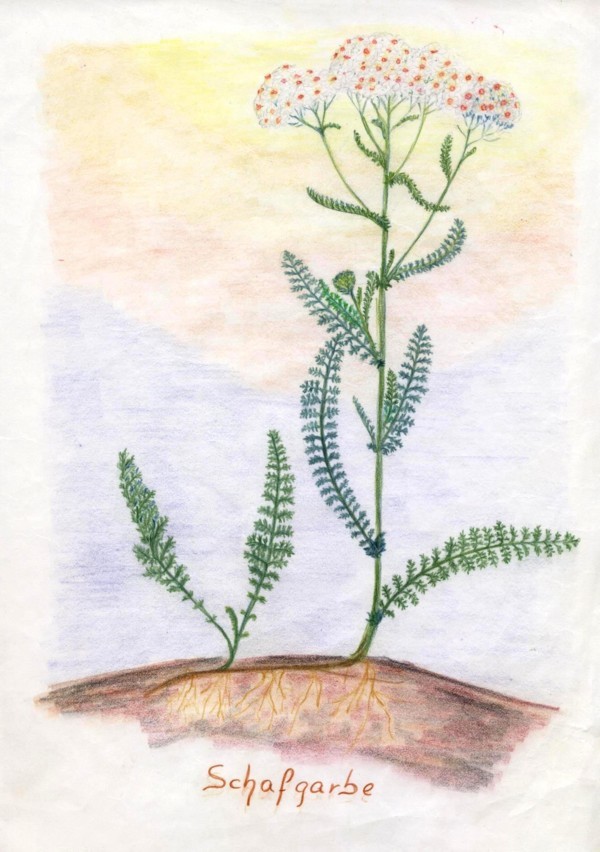
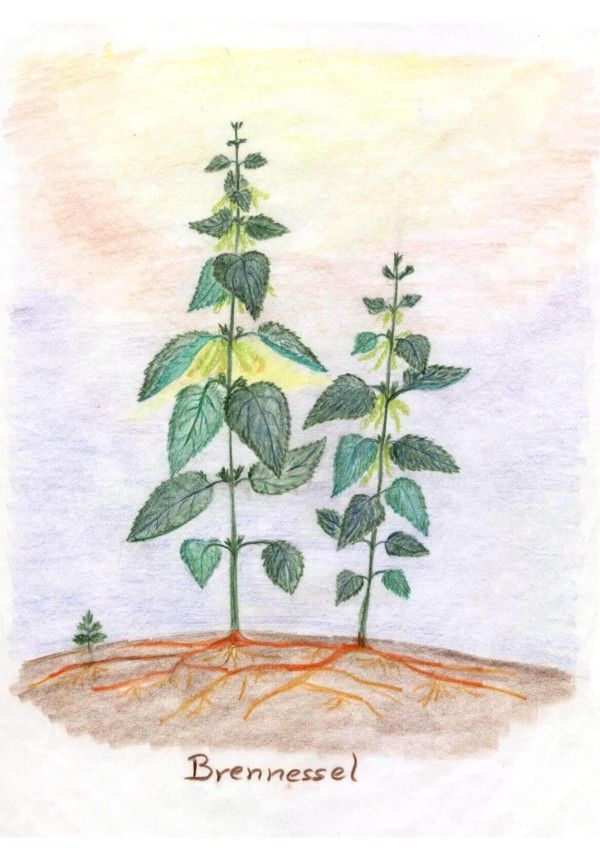
I know quite well, those who have studied academic agriculture from the modern point of view will say: “You have still not told us how to improve the nitrogen-content of the manure.” On the contrary, I have been speaking of it all the time, namely, in speaking of yarrow, camomile and stinging nettle. For there is a hidden alchemy in the organic process. This hidden alchemy really transmutes the potash, for example, into nitrogen, provided only that the potash is working properly in the organic process. Nay more, it even transforms into nitrogen the limestone, the chalky nature, if it is working rightly.
Even externally, in a quantitative chemical analysis as it were, the relationship… might well be revealed. The fact is that under the influence of hydrogen, limestone and potash are constantly being transmuted into something very like nitro-gen, and at length into actual nitrogen. And the nitrogen which is formed in this way is of the great-est benefit to plant-growth. We must enable it to be thus engendered by methods such as I have here described.”
Rudolf Steiner, 5th Agriculture Lecture, Koberwitz, 1924.
The Taming of the Atom: A Sub-Natural Phenomenon
Georg Unger, in his lectures ‘On Nuclear Energy and the Occult Atom’ (Von Wesen der Kernenergie), wrote of Rudolf Steiner having written and lectured on three aspects of the atom:
- The hypothetical atom of the 19th century;
- The atom as a sub-sensible entity, responsible for many of the strange phenomena studied by chemists and physicists from the early 20th century.
- An “occult atom” as a spiritual entity.
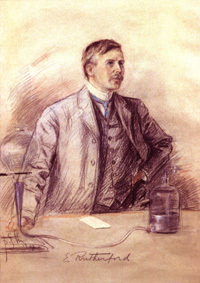
When Steiner said that ‘observation of several elements has tamed the materialistic lion’, it was with respect to the atom’s second aspect. Presumably he was referring to the work of scientists such as Henri Becquerel, Marie Curie, Ernest Rutherford, and Frederick Soddy.
The theoretical and practical work by Einstein (1905) and Perrin (1908) was such that even the ‘old fighter against atomistics’, Wilhelm Ostwald, was converted to the idea of their existence as a real phenomenon of (sub-)nature.
The earliest mainstream proof of atoms being capable of transmutation was made by Soddy and Rutherford, who discovered that radioactive thorium was converted into radium and alpha ‘particle’ radiation in 1901. By 1907 alpha ‘particles’ were shown to be helium nuclei.
Biological Transmutation
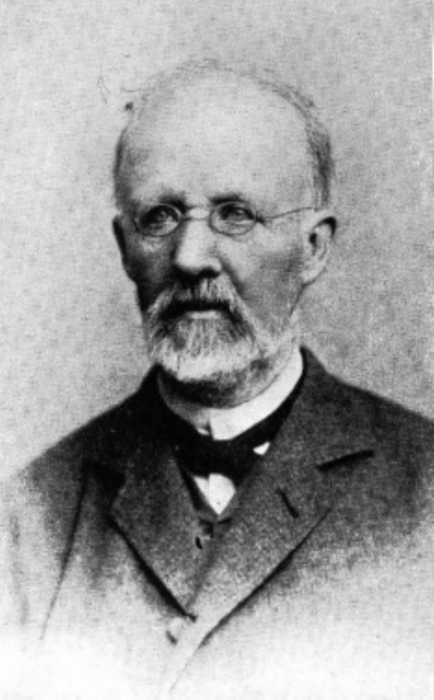
From the 1840s most scientists believed that chemical elements were characterised by the properties and actions of invisible, immutable atoms. The possibility of living organisms being able to transmute the chemical elements of which they were composed was considered heresy. The biological transmutation experiments of Albrecht Herzeele from 1873 to 1883 were considered deluded, and the phenomenon is still considered impossible by most scientists.
Fortunately Herzeele’s work was described by the philosopher W. H. Preuss. Though there is no evidence that Steiner knew of Herzeele, he certainly knew about Preuss, and wrote about him in his ‘Riddles of Philosophy’. His work was rediscovered by Hauschka (Substanzlehre, 1942).
Shortly after Steiner’s Agriculture lectures, given in 1924, further inorganic and biological transmutation research was conducted. This included the work of Amé Pictet (1925), Freundler (1928), Spessard (1940), Spindler (1959), Baranger (1950-70), Kervran (1960-80), and others, including Holleman (1975-89). The most convincing modern research into the biological transmutation of chemical isotopes (elements) has been conducted by Vysotskii and Kornilova from the 1990s.
For further information please visit:
This text is a work in progress. The full prologue will include an outline of the book as a whole. For the latest version of the book see the Table of Contents.

 Rethinking the Nature of Substance
Leave a comment